
Plane enthusiasts and history buffs will get to see more artifacts at the popular Steven F. Udvar-Hazy Center near Dulles International Airport in the coming years after the museum undergoes its first-ever expansion.
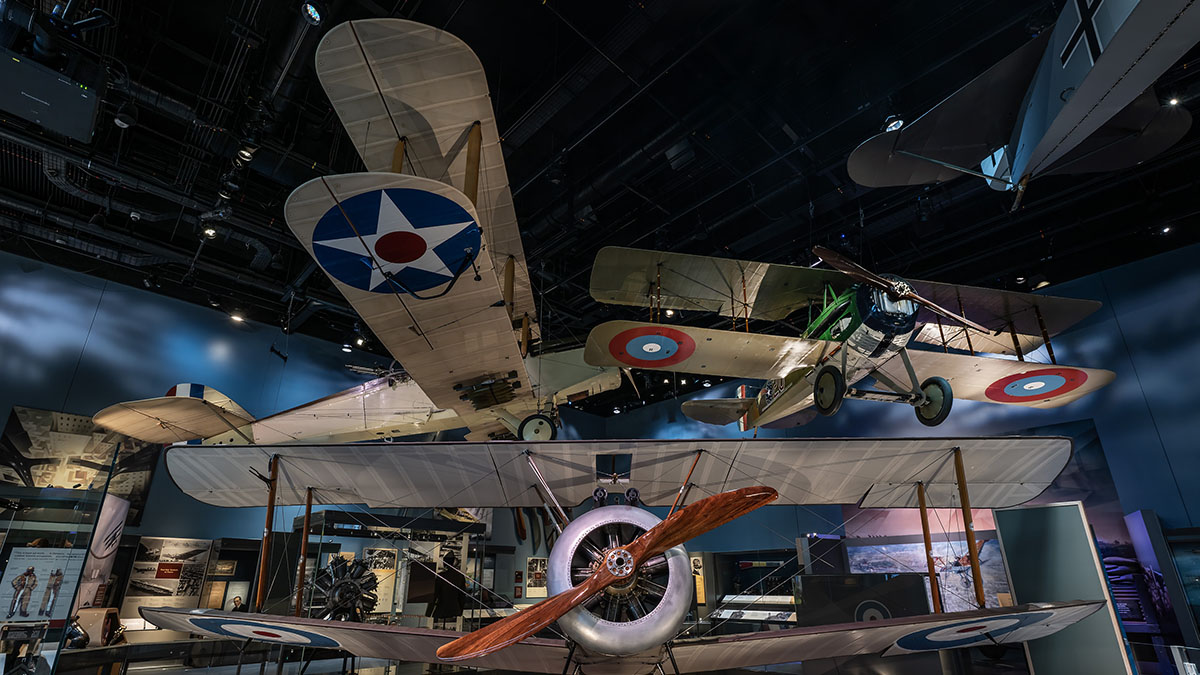
The Smithsonian’s National Air and Space Museum announced Tuesday it’s adding 44,000 square feet of space to the Boeing Aviation Hangar at Udvar-Hazy. The expansion will allow for more planes that are currently in storage to go on display. Udvar-Hazy also plans to rearrange planes that are currently in the hangar.
It’s the first major construction project at the center since it opened in Chantilly, Virginia, in 2003.
“Adding on to the Udvar-Hazy Center will allow us to offer even more to the public and will give us a chance to make major changes to the arrangement of artifacts in the entire center, enhancing the experience for our visitors,” Chris Browne, the John and Adrienne Mars Director of the museum, said in a release.
What aviation artifacts does Udvar-Hazy plan to show after the expansion?
The museum said it’s still finalizing plans, but revealed there are five artifacts it plans to show once the expansion is complete in 2028. They include World War II bombers, a seaplane that survived Pearl Harbor and a Depression-era glider.
Here’s more about each aircraft:
Boeing B-17 Flying Fortress “Shoo Shoo Shoo Baby”
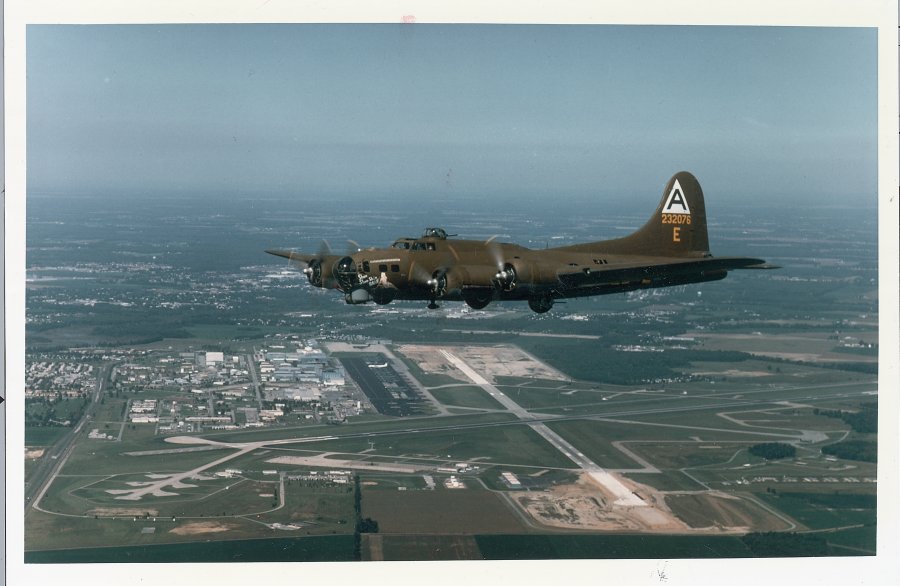
Shoo Shoo Shoo Baby, named after a popular song, flew 24 combat missions in World War II, receiving flak damage seven times, according to the National Museum of the U.S. Air Force.
The Flying Fortress is one of the most famous airplanes ever built, the Air Force sai. The aircraft served in every combat zone, but it is best known for the daylight strategic bombing of German industrial targets.
Martin B-26 Marauder “Flak-Bait”
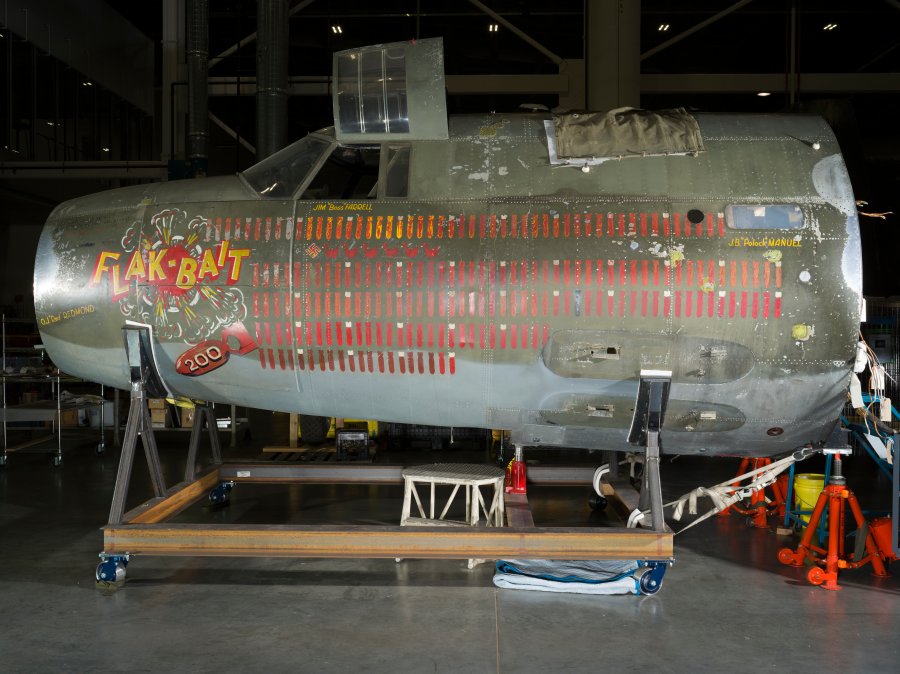
The medium bomber and its crews flew more missions than any other American aircraft during WWII, with 700 hours of combat against Nazi Germany.
James J. Farrell of Greenwich, Connecticut, flew the most missions in “Flak-Bait.” He named the bomber after “Flea Bait,” his brother’s nickname for the family dog.
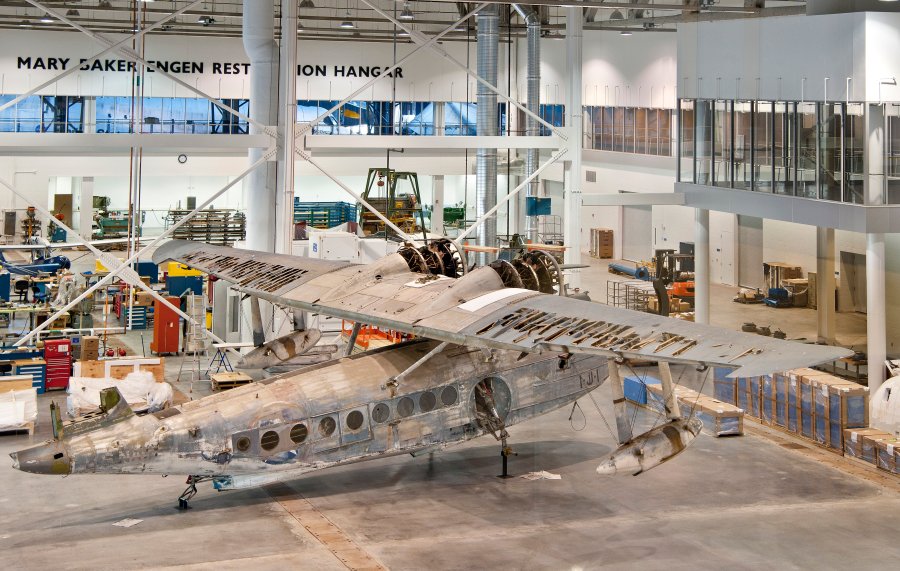
This amphibious seaplane is the only aircraft at Udvar-Hazy that was at Pearl Harbor, Hawaii, on Dec. 7, 1941.
On the day of the attack, the plane had a colorful paint job, including silver with black on the bottom, green tail surfaces and a red band around the rear of the fuselage. A ground crew repainted it blue a few days after the attack, but it weathered after many years outside.
It’s been in the restoration hangar since 2011.
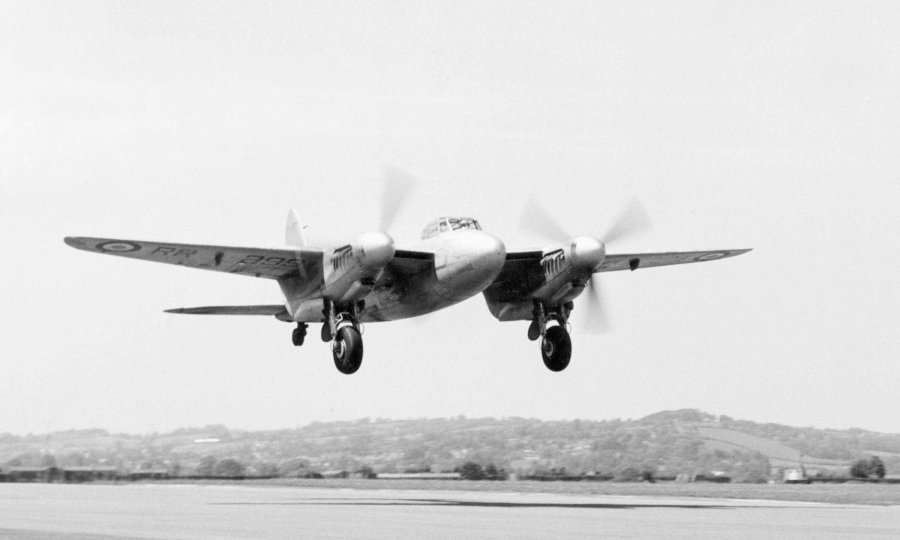
The United Kingdom’s Royal Air Force used this “Wooden Wonder” during World War II.
“It excelled at day and night bombing from high or very low altitudes, long-range reconnaissance, air-to-air combat in daylight and darkness, and finding and striking distant targets at sea,” the museum says on its website. “There has never been a more successful, combat-proven warplane made of wood.”
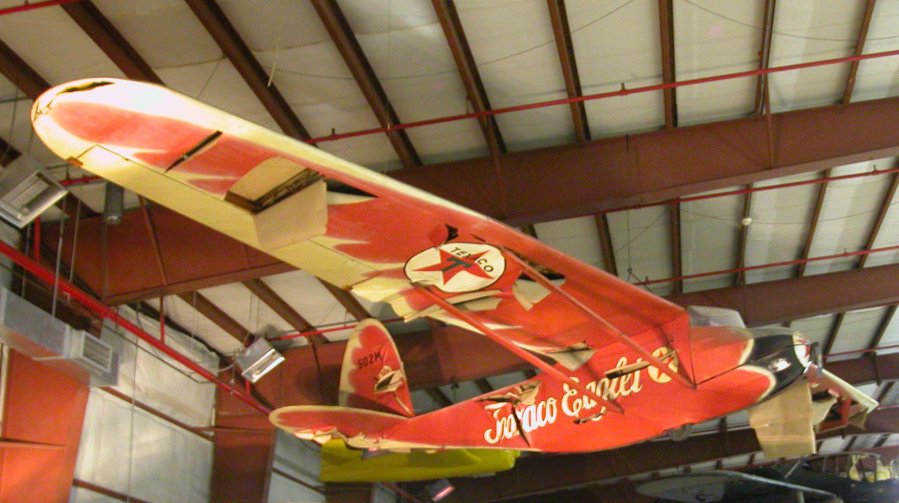
During the Great Depression, pilot Frank Hawks flew the Franklin PS-2 glider across the United States during an unprecedented stunt that enthralled the nation.
The “Eaglet” flew a total of 4,000 miles and remained airborne for 570 hours during 50 flights.
Udvar-Hazy expects to get new acquisitions that will go on display before construction of the expansion is complete.
The museum is currently undergoing a $60 million campaign to secure funding for the addition. Like the rest of the center, the expansion will be privately funded.
The Smithsonian said Udvar-Hazy will remain open during construction.
The center is one of the top-20 most-visited museums in North America, welcoming more than 1 million visitors per year, according to the Smithsonian.
from Local – NBC4 Washington https://ift.tt/3K2HXVm


0 Comments