
Washington, D.C., Mayor Muriel Bowser spoke about public safety Wednesday as local officials and members of Congress begin to consider what happens when President Donald Trump’s crime emergency comes to an end.
Bowser spoke at Metropolitan Police Department (MPD) headquarters, one day after she signed an order laying out how D.C. officials will continue cooperating with federal agencies once the crime emergency ends.
It’s been more than three weeks since Trump declared the crime emergency in D.C., which allowed him to federalize MPD for 30 days.
“We gotta get out of the emergency,” Bowser said Wednesday. She said that her new order lays out a framework for how D.C. will exit the emergency. It includes the new Safe and Beautiful Emergency Operations Center that will coordinate efforts between D.C. police and federal agents.
“The emergency ends on Sept. 10. The only way it can be extended legally is by the Congress,” Bowser said. “So, I want the message to be clear to the Congress. We have a framework to request or use federal resources in our city. We don’t need a presidential emergency.”
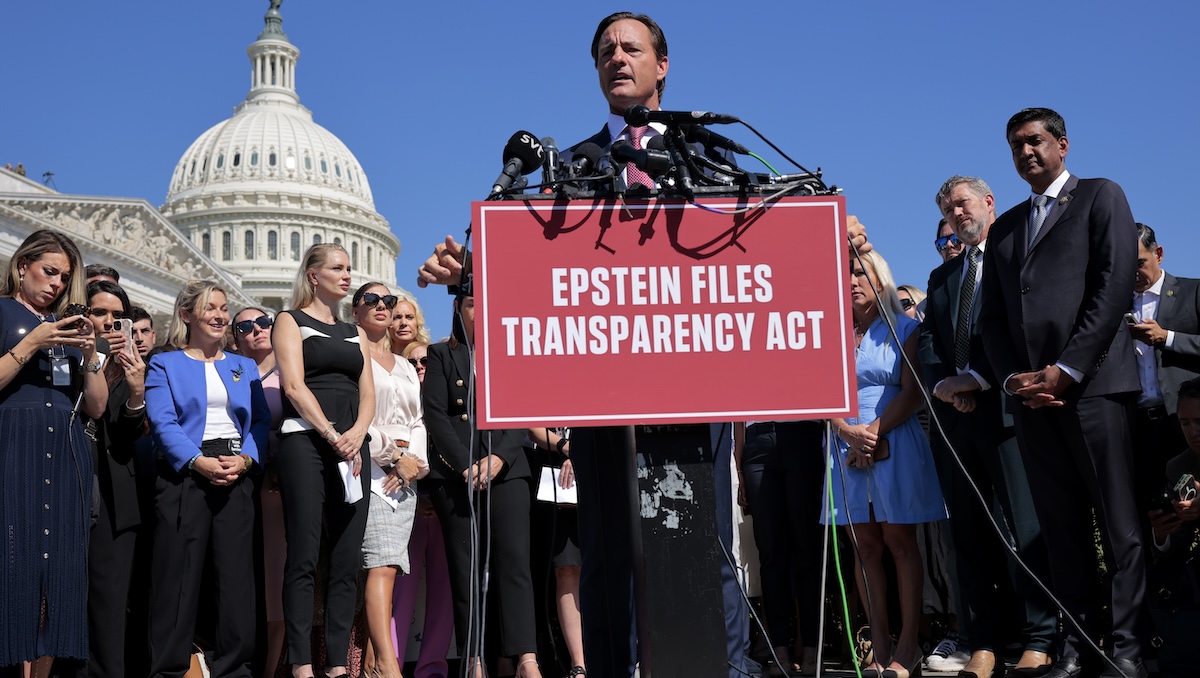
Bowser’s order comes as several Republican members of Congress are introducing legislation aimed at D.C., including a proposal from U.S. Rep. Andy Biggs, R-Ariz., to extend the crime emergency for six months.
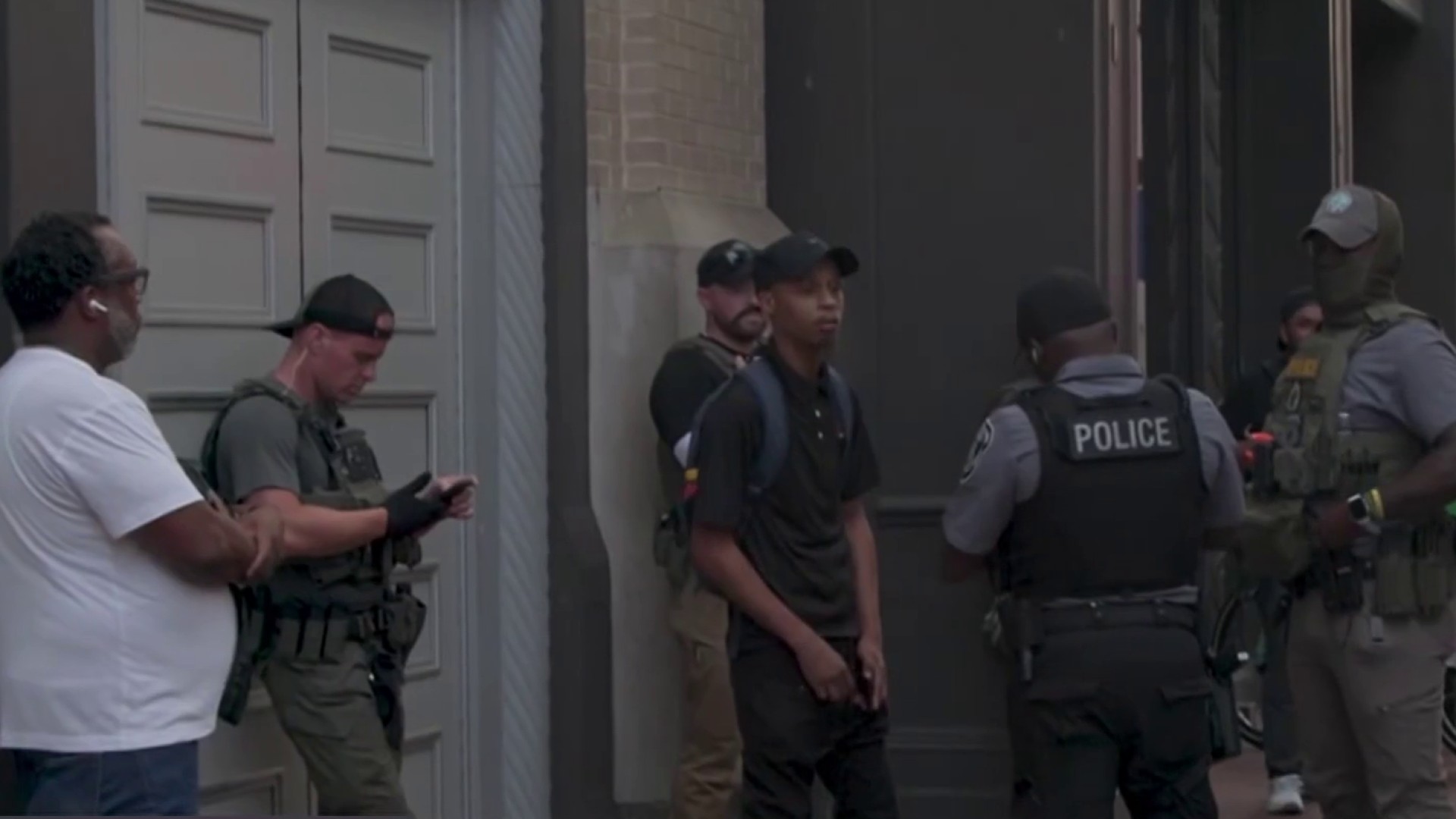
If the Trump administration’s crime emergency for D.C. isn’t extended, the president can no longer tell D.C. police what to do. However, it doesn’t mean the National Guard and federal officers would have to stop patrolling D.C. streets.
Bowser started Wednesday’s news conference by announcing a new labor agreement covering MPD, including a 13% pay increase for officers, sergeants, lieutenants and higher-ranking staff beginning Oct. 1, plus plans to expand programs that allow officers to take home cars and a partnership with the University of the District of Columbia.
“These pay increases are part of a larger comprehensive strategy to recruit and retain and reward our officers,” she said.
The goal is to have 4,000 officers. Right now, MPD has just under 3,200 sworn officers.
Bowser received a lot of criticism from D.C. residents after her news conference last week, during which she thanked the Trump administration for the increased law enforcement presence and touted the dramatic decrease in crimes since the federal surge in the District. At that conference, she spoke of plans to recruit hundreds more MPD officers and reduce reliance on overtime.
D.C. officers played an important role in driving down crime in the past two weeks, Bowser said Wednesday.
The mayor has been trying to strike a balance all year to avoid picking a fight with Trump. In some respects, it appears to have worked, as the president has not followed through with threats to overturn Home Rule and praised Bowser for cooperating with the federal surge.
A group of more than 100 progressive organizations, including churches and unions, wrote the mayor a letter urging her to more forcefully push back against the White House, which the mayor continues to be reluctant to do.
Meanwhile, D.C. Del. Eleanor Holmes Norton and Rep. Glenn Ivey, a Democrat from Maryland, spoke at a separate news conference Wednesday morning, demonstrating the difference in approaches by Bowser and the Democrats in Congress.
“No emergency exists in D.C. that the president did not create himself,” Norton said. She spoke about introducing bills that would require federal agents in D.C. to wear body cameras and give the District control over its National Guard.
Ivey said he was a federal prosecutor in D.C. for four years and credited crime prevention efforts along with local law enforcement for the District’s falling crime rates. He also criticized the expense of deploying so many federal resources to D.C.
“Let’s move away from this kind of nonsense. Let’s get off the show. The show costs a million dollars a day here in the District of Columbia, which is crazy while they’re withholding $1.1 billion of D.C.’s own money. Which the mayor said, ‘If you release it, I want to hire more cops and teachers,'” Ivey said, referring to Congress’s move to slash D.C.’s fiscal year 2025 budget.
Trump has threatened to deploy federal authorities to other Democrat-controlled cities, including New York, Chicago and Baltimore. Representatives from Illinois, New York and California, where Trump deployed the National Guard earlier this year, were also at the press conference.
Ivey, who represents a large part of Prince George’s County, said he’d welcome FBI, Drug Enforcement Administration or Bureau of Alcohol, Tobacco, Firearms and Explosives agents to help fight crime in his district because those agents have the proper local law enforcement training and “can make a difference.”
That’s in contrast to National Guard soldiers who don’t have training on handling law enforcement tasks including maintaining a chain of custody or reading Miranda rights, he said.
In D.C., National Guard troops were expected to help with security and support law enforcement, but not make arrests or searches.
Republicans in the House and Senate also spoke out during their own press conference Wednesday, painting a very different picture of crime in D.C.
Sen. Marsha Blackburn of Tennessee, Sen. Jon Husted of Ohio, Sen. John Cornyn of Texas and others in the GOP thanked Trump for having “the courage and compassion” to take on public safety in D.C. as an issue, saying that people should not be afraid to visit the nation’s capital.
The Republican lawmakers were joined by Anna Giaritelli, a homeland security reporter for the Washington Examiner who says she was sexually assaulted by a homeless man in 2020. She wrote an op-ed piece for the newspaper on Aug. 14 about how her case was handled by MPD and the U.S. Attorney for D.C.’s office, arguing it is emblematic of the problems with D.C.’s law enforcement system.
The GOP lawmakers called the federal takeover of D.C.’s police force and the deployment of National Guard troops a necessary move, taken because D.C.’s mayor and council had not acted forcefully enough against crime.
Husted in particular thanked Bowser “for finally coming around and supporting a lot of the work that the President has put in place.”
“In the cases where our mayors and our governors won’t lead, because believe me — the mayors and the governors of every state in this country have the ability, every state and every city, have the ability to solve this problem. And I hope that they will,” Husted said. “The president shouldn’t have to bring the National Guard into your city. You should care enough about the people that live there to do it on your own. But if you refuse to do it, the president has prioritized the safety of the citizens of this country, and particularly in Washington, D.C.”
Cornyn took that sentiment further, accusing Democratic politicians who have spoken out against Trump’s threats to deploy the National Guard in their jurisdictions of taking “a stand for the criminals.”
“You’d think they would welcome the help,” he said.
from Local – NBC4 Washington https://ift.tt/zGyDr6g





0 Comments