
U.S. District Judge Jia Cobb, an appointee of former President Joe Biden, heard arguments Friday on District of Columbia Attorney General Brian Schwalb‘s request for an order that would remove more than 2,000 Guard members from Washington streets. She did not rule from the bench.
In August, President Donald Trump issued an executive order declaring a crime emergency in the district — though the Department of Justice itself says violent crime there is at a 30-year low.
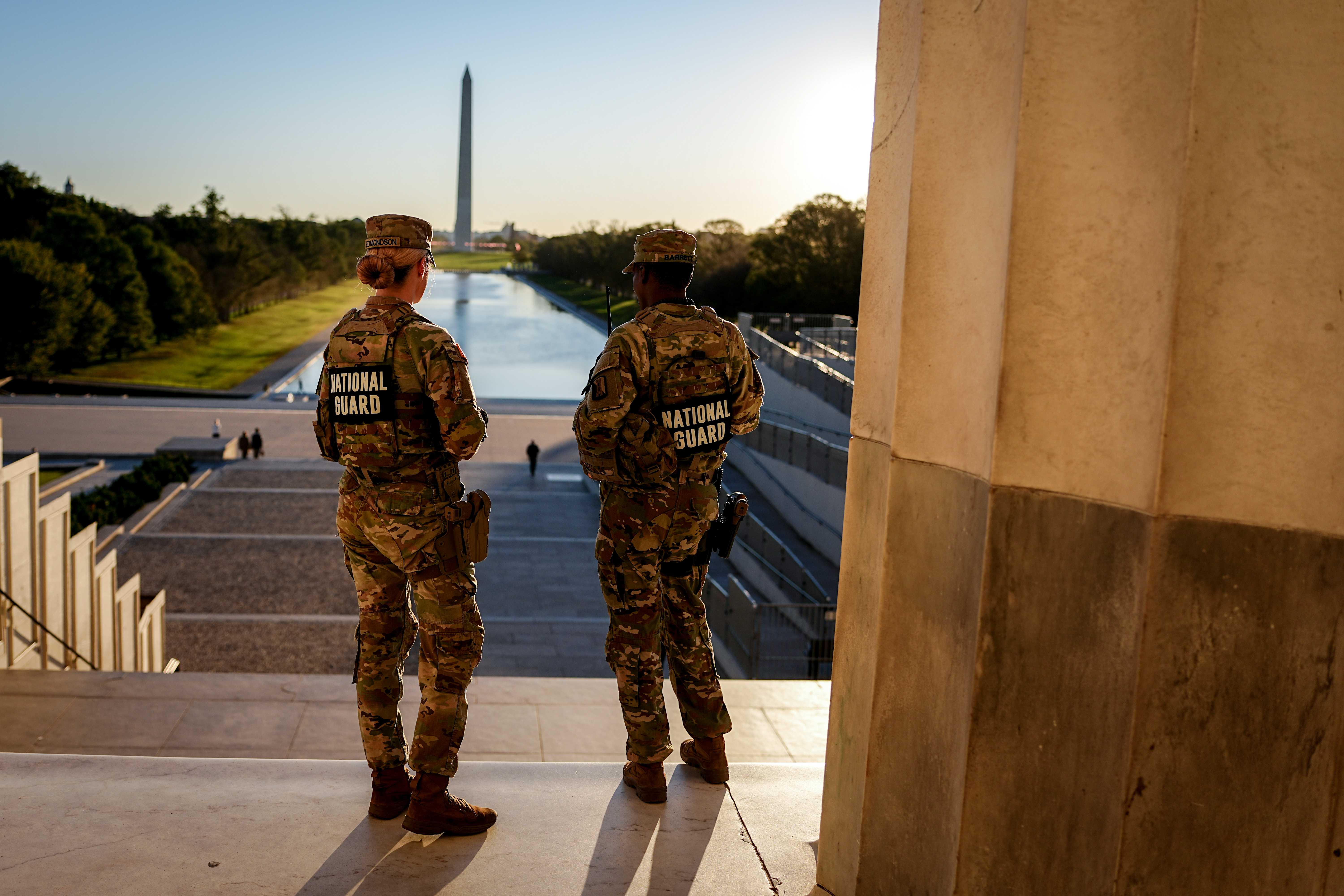
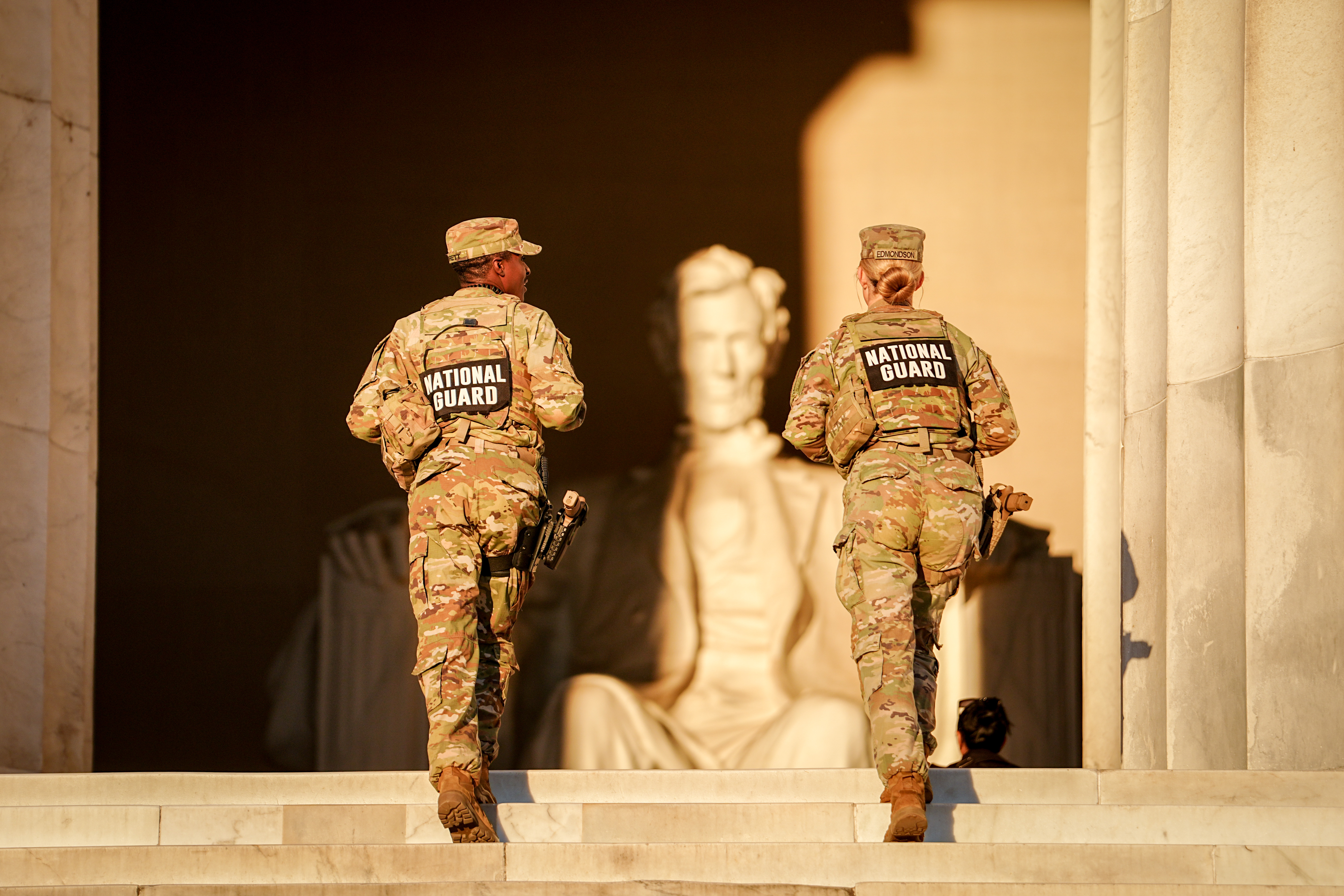
Within a month, more than 2,300 Guard troops from eight states and the district were patrolling under the Army secretary’s command. Trump also deployed hundreds of federal agents to assist them.
“Our constitutional democracy will never be the same if these occupations are permitted to stand,” attorneys from Schwalb’s office wrote.
Government lawyers said Congress empowered the president to control the D.C. National Guard’s operation. They argued that Schwalb’s lawsuit is a frivolous “political stunt” threatening to undermine a successful campaign to reduce violent crime in Washington.
Although the emergency period ended in September, more than 2,200 troops remain.
Court documents filed by Schwalb as part of the lawsuit to remove Guard troops from D.C. say they’re likely sticking around until this summer.
The filing says the D.C. attorney general has found evidence in the discovery process that the Guard’s commanding general has been preparing for wintering and that troops are likely to remain in the District indefinitely, potentially through at least next summer for America 250.
It’s not just the length of the deployment Schwalb is fighting, but what the guard is doing too.
Documents filed in the lawsuit confirm guard commanders say, “our soldiers are deputized federal law enforcement.” More court records show the Marshal Service waived basic law enforcement training and law enforcement experience requirements on guard members deputized to work on D.C. streets — though they do have to be screened by their Guard unit.
Other documents show guard members aren’t just armed, but training with handcuffs too.
Schwalb says all of those findings violate the Posse Comitatus Act, which prohibits military members from policing American streets.
After Friday’s hearing on an preliminary injunction against Guard deployment in D.C., Schwalb released a new statement.
“Today we again made clear: the U.S. military should not be policing American citizens on American soil,” the statement says. “It does not make us safer to have out-of-state military — many of whom are not from here and do not know our communities, who are not accountable to local residents and are untrained in local law enforcement — policing our streets, driving military vehicles, armed with rifles and carrying handcuffs.”
The statement goes on to restate that D.C. leaders and residents did not ask for the Guard’s help, and calls their continued presence “unprecedented federal overreach.”
“I have the utmost respect for the National Guard members, who have volunteered to drop everything at a moment’s notice to serve their country,” his statement continues. “But since their deployment to DC we’ve seen report after report of the National Guard raking leaves, picking up trash, spreading mulch, helping cats out of trees—in addition to their local law enforcement mandate. This is not a good use of the National Guard’s training, their expertise. It is not a good use of federal resources or your tax dollars.”
The statement ends by saying “It is time to let the National Guard go home,” returning troops to their family members.
“This is not normal, or legal — and I look forward to continuing our case in court,” Schwalb says.
Several states that deployed some of their National Guard troops to D.C. told The Associated Press they would bring their units home by Nov. 30, unless extended.
Among those states was West Virginia. A civic organization called the West Virginia Citizen Action Group says Gov. Patrick Morrisey exceeded his authority by deploying 300 to 400 Guard members to support Trump’s efforts there.
Under state law, the group argues, the governor may deploy the National Guard out of state only for certain purposes, such as responding to a natural disaster or another state’s emergency request.
“The Governor cannot transform our citizen-soldiers into a roving police force available at the whim of federal officials who bypass proper legal channels,” the group’s attorneys, with the American Civil Liberties Union of West Virginia, wrote in a court document.
A temporary federal appeals court decision, also on Friday, paused a decision issued by a three-judge panel earlier in the week that could have allowed President Donald Trump to deploy 200 Oregon National Guard troops, ostensibly to protect federal property in Portland.
The 9th U.S. Circuit Court of Appeals said it needs until 5 p.m. Tuesday to decide whether to reconsider the panel’s decision, and the panel’s decision won’t take effect until then.
In Chicago, another U.S. city to which Trump has deployed National Guard troops, U.S. District Judge April Perry on Wednesday blocked Guard deployment to the area until the case is decided in her court or the U.S. Supreme Court intervenes.
Perry previously blocked the deployment for two weeks through a temporary restraining order.
Attorneys representing the federal government said they would agree to extend the order, but would also continue pressing for an emergency order from the Supreme Court that would allow for the deployment.
Lawyers representing Chicago and Illinois have asked the Supreme Court to continue to block the deployment, calling it a “dramatic step.”
The developments are the latest in a head-spinning array of lawsuits and overlapping rulings prompted by Trump’s push to send the military into Democratic-run cities despite fierce resistance from mayors and governors.
This story uses functionality that may not work in our app. Click here to open the story in your web browser.
from Local – NBC4 Washington https://ift.tt/RZKOHqJ




0 Comments