
Following the shooting at the White House Correspondents’ dinner last month, multiple Republican lawmakers have proposed measures to authorize President Donald Trump’s proposed East Wing Modernization Project – with one directing as much as $1 billion toward securing the complex.
The move comes months into a legal challenge brought by a nonprofit that argues the ballroom needs congressional approval before proceeding.
But the News4 I-Team found that, while potential congressional approval may quash the legal battle the ballroom faces, some government ethics watchdogs have remaining concerns about the millions in private dollars already given to fund it.
“The White House has aggressively solicited this money. Private companies have paid this money in fealty to the president, and we should know why they paid it, and what’s going to happen to it, and the administration should give it back,” said Donald Sherman, who leads the legal advocacy group Citizens for Responsibility and Ethics in Washington.
Within hours of the shooting at the Hilton last month, Trump made the case that the violence never would have happened inside his proposed 1,000-seat ballroom at the White House – though the press association’s dinner has never been held there.
“We need the ballroom. It’s why the Secret Service – it’s why the military – are demanding it,” he said.
Both South Carolina Sen. Lindsey Graham and Kentucky Sen. Rand Paul – both Republicans – quickly introduced bills that would authorize the project, though just one would pay for it with $400 million in taxpayer dollars.
“If this is not a wake-up call, what would be?” Graham asked following the Correspondents’ dinner shooting.
Paul unveiled a bill that also would authorize the project, while letting private donors who have already given millions pick up the tab.
And this week, Senate Judiciary Chair Chuck Grassley, of Iowa, announced a $1 billion plan in a long-term funding bill to pay for security elements of East Wing modernization – a move many Democratic lawmakers have described as a “bait and switch” after Trump, for months, boasted the project would cost taxpayers nothing.
Sherman said if the project is indeed a matter of national security, “private companies should not be subsidizing our national security interests.”
He continued: “The threshold question is, is there a legitimate national security concern that demands that we have a ballroom? If there is, then American taxpayers, rather than private companies, should be paying for it.”
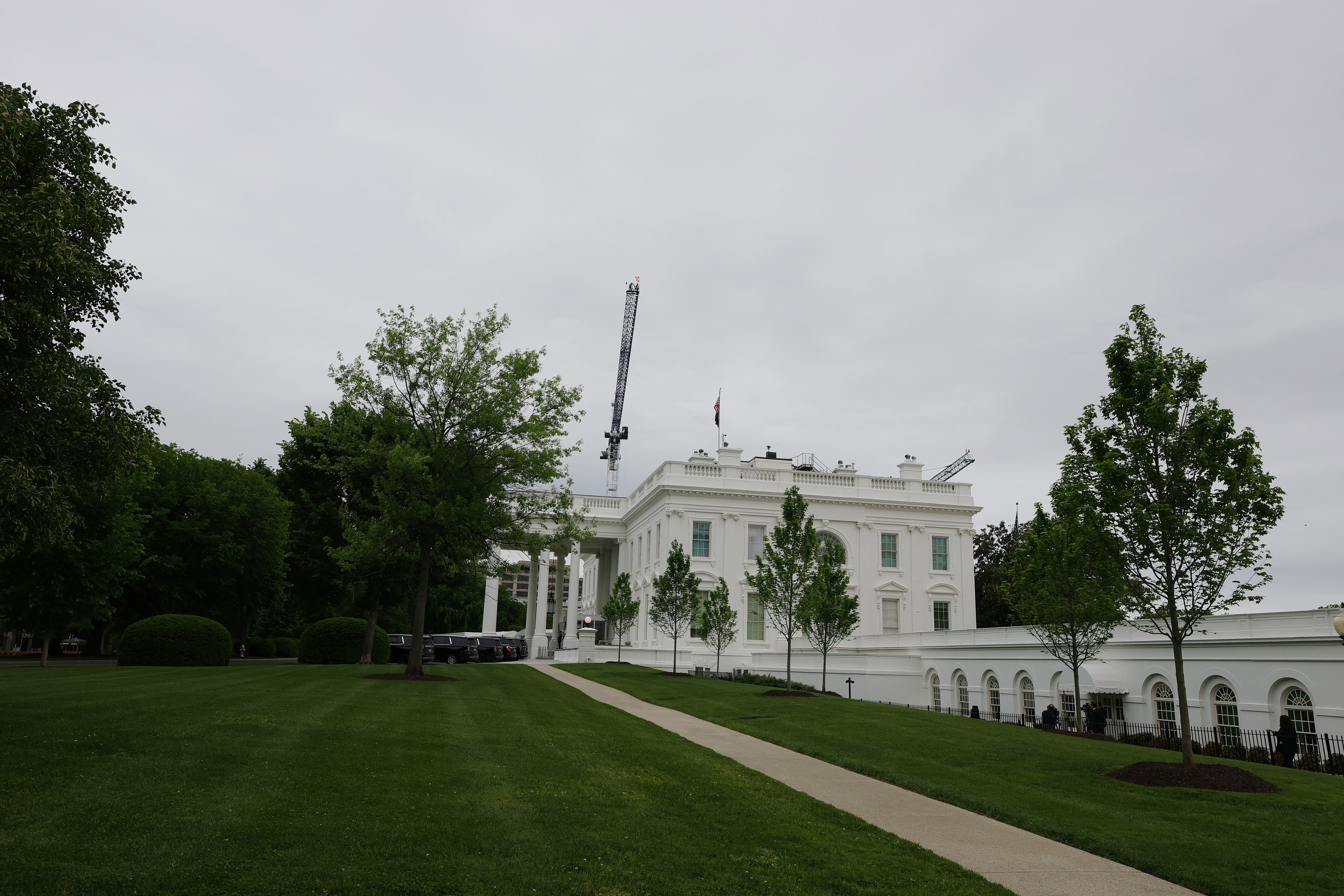
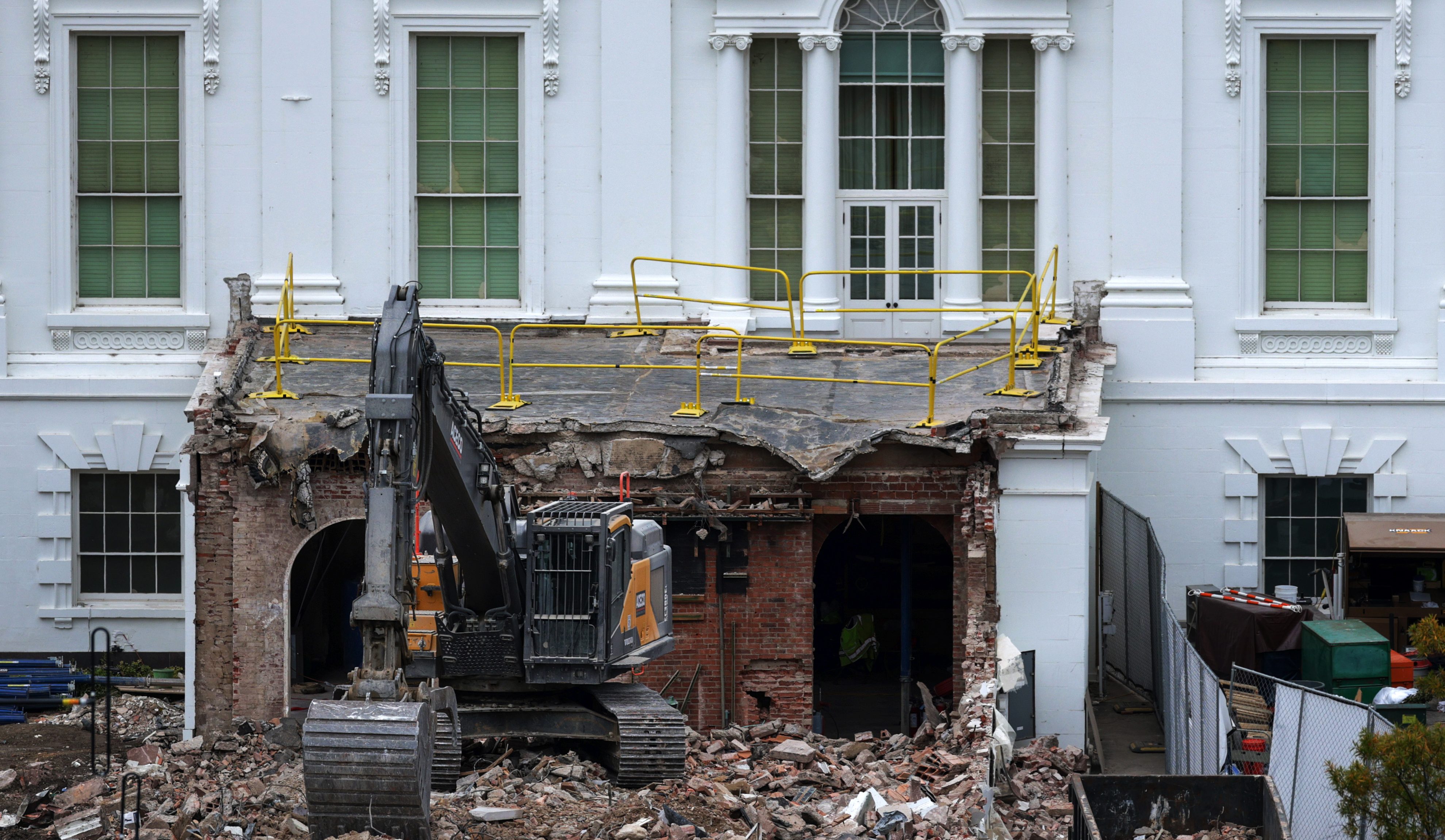
News4 previously talked to Sherman about his concern over allowing private donors, many of whom are unnamed, to donate to the president’s project.
Months ago, Trump said he already had raised over $350 million for the project, funding by billionaires and corporate donors, including Comcast, the parent company of News4 & NBCUniversal. Though the White House has made some of the donors’ names public, it allowed others to remain anonymous.
News4 asked Sherman what he suspects will happen to the funds if Congress authorizes the ballroom.
“I have no idea, and that’s part of the problem,” he said.
It’s a concern Democratic Sen. Elizabeth Warren, of Massachusetts, echoed on the Senate floor in recent days.
“If Congress bankrolls this ballroom for Trump’s corporate donors like the other Republicans are proposing, what happens to all those private donations? If Trump is using his ballroom to facilitate a giant pay-to-play scheme, then the American people deserve to know,” Warren said.
The I-Team asked the White House if those private dollars would be returned if Congress authorizes the project, but did not immediately receive a reply.
Graham said that under his legislation, private donations could still be used, noting: “But I think they should be used for buying china and stuff like that,” he said.
Whether the funds were to be used for china or another cause, Sherman said anonymous private donations are problematic.
“The public needs to understand, particularly because the president has continually sought to solicit this money, who the money is coming from and what it is ultimately going to. My view is that it should go back to the companies that provided it, but the public needs to know where it went and who’s controlling where it goes,” he said.
Last month, a federal judge temporarily halted aboveground construction of the project, designed to sit atop a massive military complex. But an appeals court allowed construction to continue as it reviews the judge’s decision in that case, brought by the National Trust for Historic Preservation. The nonprofit argues the ballroom should never have begun without congressional approval, in addition to approvals from the U.S. Commission of Fine Arts and National Capital Planning Commission.
While Paul’s bill would approve the project, it also would fundamentally change how future White House construction projects proceed, by stating that instead of Congress needing to approve, the decision could just go to relevant committee chairs, in addition to the planning and arts panels.
News4 asked the National Trust for Historic Preservation if any of these measures, if passed, would satisfy their concern, but did not receive a response. The I-Team also asked the Trust for the National Mall, the nonprofit accepting donations on behalf of the White House, what would happen to the donations if Congress ultimately pays for the project but did not hear from them either.
Sign up for our free deep-dive newsletter, The 4Front, to get standout News4 stories sent right to your inbox. Subscribe here.
from Local – NBC4 Washington https://ift.tt/KhT8jWk



0 Comments