
A measles case has been reported in a Maryland resident who traveled internationally, the Maryland Department of Health said on Saturday.
The patient was at Dulles International Airport and a clinic in D.C.’s Adams Morgan neighborhood on June 17, according to health officials.
People who were in these locations at the following times may have been exposed:
- Dulles International Airport Concourse C international arriving corridors, on transportation to the International Arrivals Building and in baggage claim area on June 17 from 6 a.m. – 11 a.m.
- Mary’s Center Adams Morgan Clinic on June 17 from 4 p.m. – 8:30 p.m.
DC Health and the Virginia Department of Health are also investigating the case.
The Maryland Department of Health said it will not be releasing more information about the patient in order to protect their privacy.

What to do if you’re exposed
If you think you may have been exposed, all three health departments recommend finding out if you have been fully vaccinated against measles. Vaccine records can be obtained through your local health department or healthcare provider.
If you have been fully vaccinated, the risk of contracting measles is relatively low, they said. Those who haven’t should monitor for symptoms and call their local health department or healthcare provider with any questions.
Immunocompromised people who may have been exposed should also check with their doctor, DC Health said, especially if symptoms start to develop.
Anyone who has had two doses of a measles containing vaccine or was born before 1957 is considered protected and does not need to take any action, according to DC Health. If you have received only one dose, you are most likely protected, but health officials advise talking to a healthcare provider about receiving a second dose for full immunity.
People who are at risk and have been exposed should watch out for symptoms for 21 days after the exposure. If symptoms appear, isolate immediately and then call your healthcare provider, DC Health said. If it is necessary to see the healthcare provider in person or go to the emergency room, call ahead of time so they can protect staff and other patients.
The Virginia Department of Health is also asking residents to report any exposures using this form.
What are the symptoms?
Symptoms of measles develop over two stages.
The first stage typically begins seven to 14 days after exposure. Here are some common symptoms, according to the Virginia Department of Health:
- Fever over 101 degrees
- Runny nose
- Red, watery eyes
- Cough
The second stage starts three to five days after the initial symptoms begin and is marked by a rash on the face, which then spreads to the rest of the body.
A person with measles is contagious from four days before this rash appears until four days after it appeared, according to the according to the Virginia Department of Health.
Preventing measles
Measles is considered highly contagious and can be spread through the air when an infected person breathes, sneezes or coughs, DC Health said. It can also cause serious health complications or even death, according to the Centers for Disease Control and Prevention (CDC).
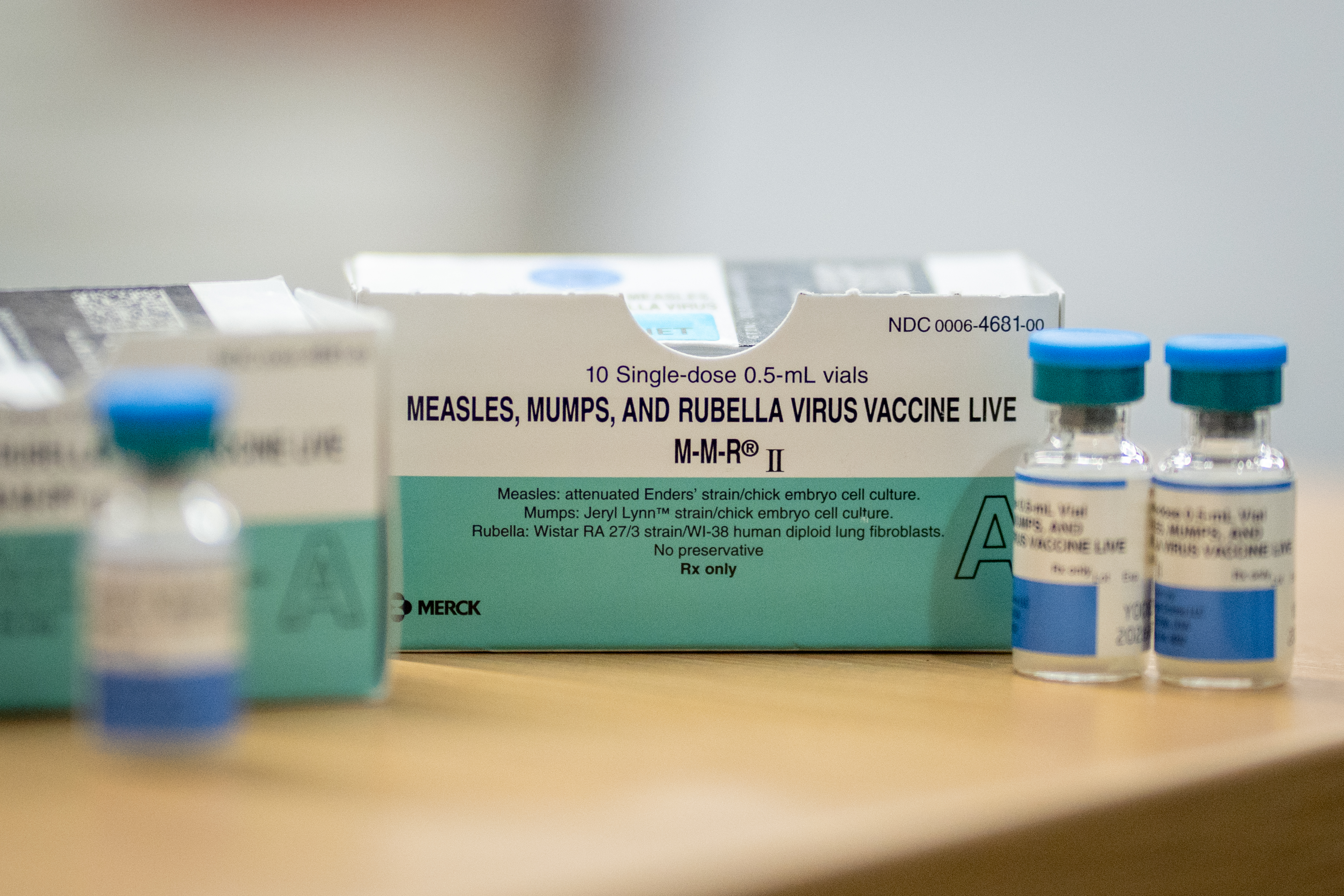
But it can be prevented with the MMR vaccine, the CDC said. Nine out of 10 unvaccinated people who are exposed to measles will become infected.
As of June 18, the CDC reported 2,104 measles cases nationwide for 2026, 93% of which were among individuals who were unvaccinated or had an unknown vaccination status.
The Maryland Department of Health recommended that all who are eligible get fully vaccinated against measles and emphasized that the MMR vaccine is covered for Maryland residents through health insurance or free through the Maryland Vaccine Program and Vaccines for Children Program for those without insurance.
Virginia residents without insurance can get the MMR vaccine for free through Virginia Vaccines for Children and Virginia Vaccines for Adults.
Children under 19 in the District who are eligible for Medicaid or enrolled in Medicaid, uninsured or under-insured may qualify for D.C.’s Vaccines for Children Program.
from Local – NBC4 Washington https://ift.tt/e6rm9tg


0 Comments