
One month after a break in the 72-inch-wide pipe that carries sewage from Virginia and Maryland to the D.C. Water treatment facility, officials addressed the latest developments, saying federal agencies have now begun coordinating with the repair efforts.
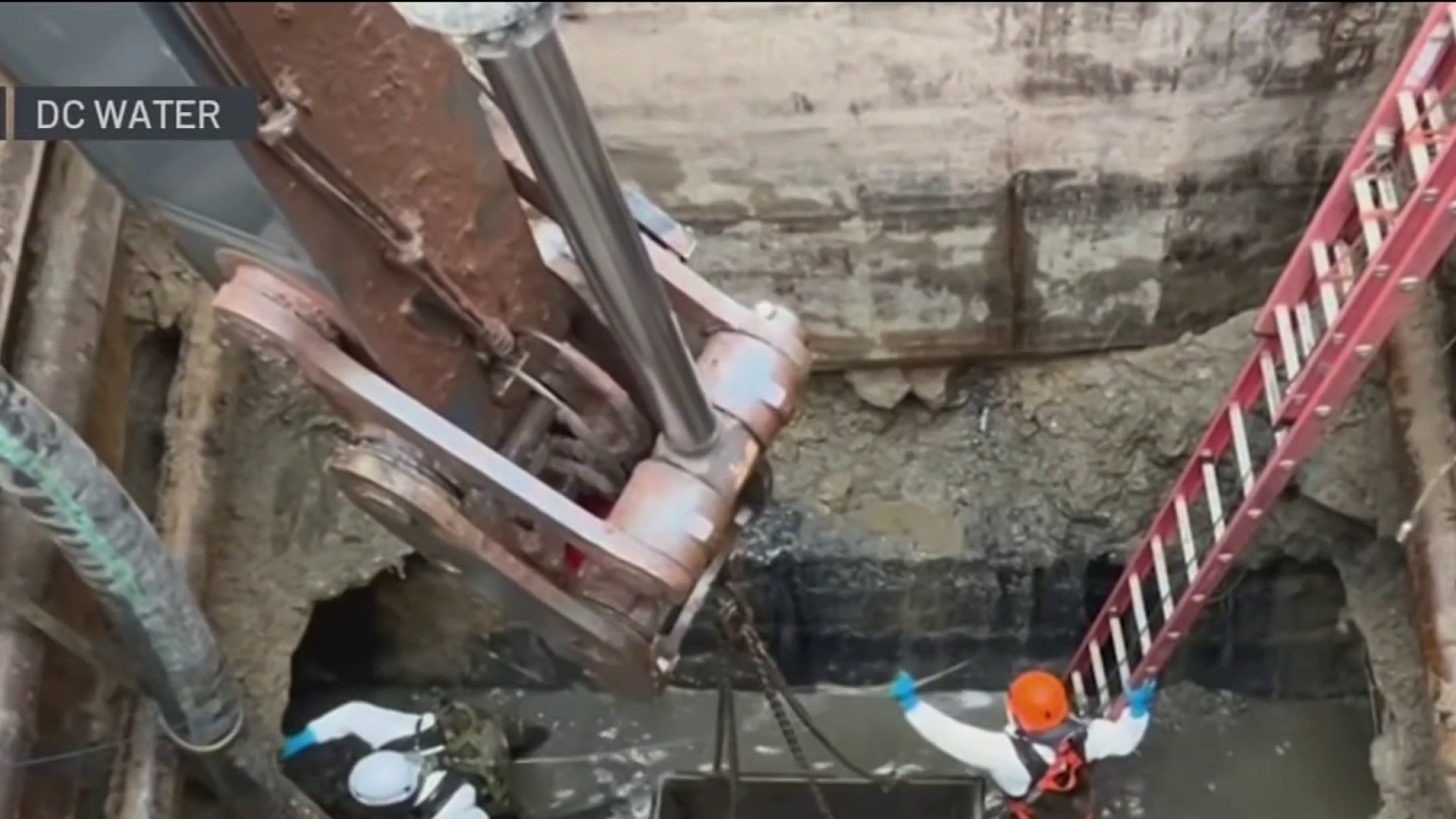
Images released by the D.C. government show the excavation site along the Clara Barton Parkway, where workers used picks and shovels to reach the collapsed section of pipe. The bypass system is complete and is diverting most wastewater back into the system, according to officials.
The cost of repair and remediation, under an existing agreement shared by D.C., Maryland and Virginia, currently stands at $20 million.
D.C. officials declared a public emergency late Tuesday. They’re asking the White House for a presidential emergency disaster declaration, which would open up federal funding.
Mayor Muriel Bowser was asked about the status of her request. She noted that the Environmental Protection Agency (EPA) and the Federal Emergency Management Agency (FEMA) had already started coordinating with the District.
“We expect 100% reimbursement,” Bowser said. “That’s why I agreed to do it.”
On Saturday morning, FEMA announced that federal disaster assistance is now available to D.C.
President Donald Trump’s authorization to FEMA allows the agency to “coordinate all disaster relief efforts to alleviate the hardship and suffering caused by the emergency on the local population” in “the District of Columbia and the area where the District of Columbia has responsibilities in the State of Maryland and Commonwealth of Virginia.”
FEMA can now provide equipment and resources to local authorities to help fix the broken pipe and mitigate the environmental effects of the spill.
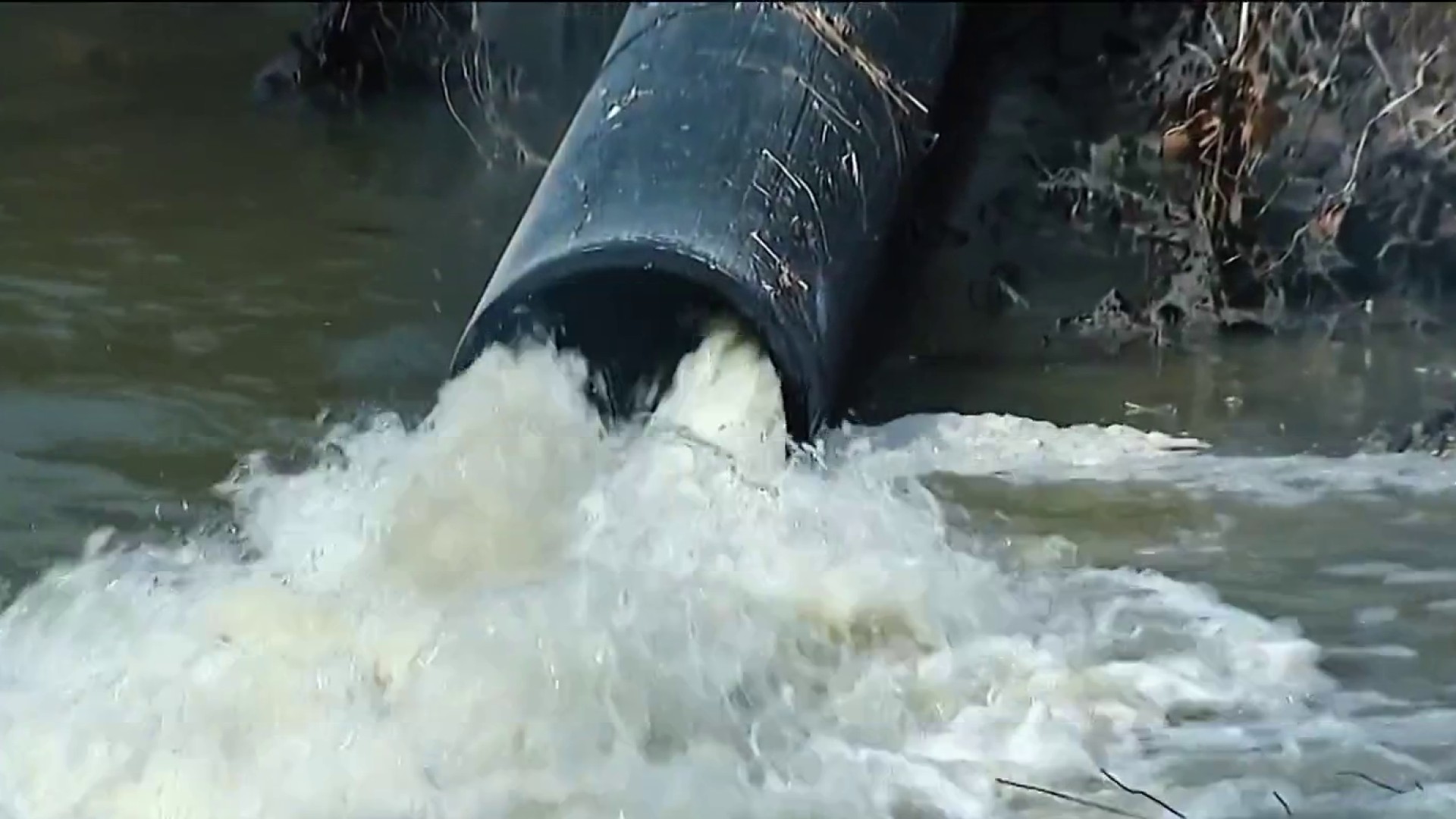

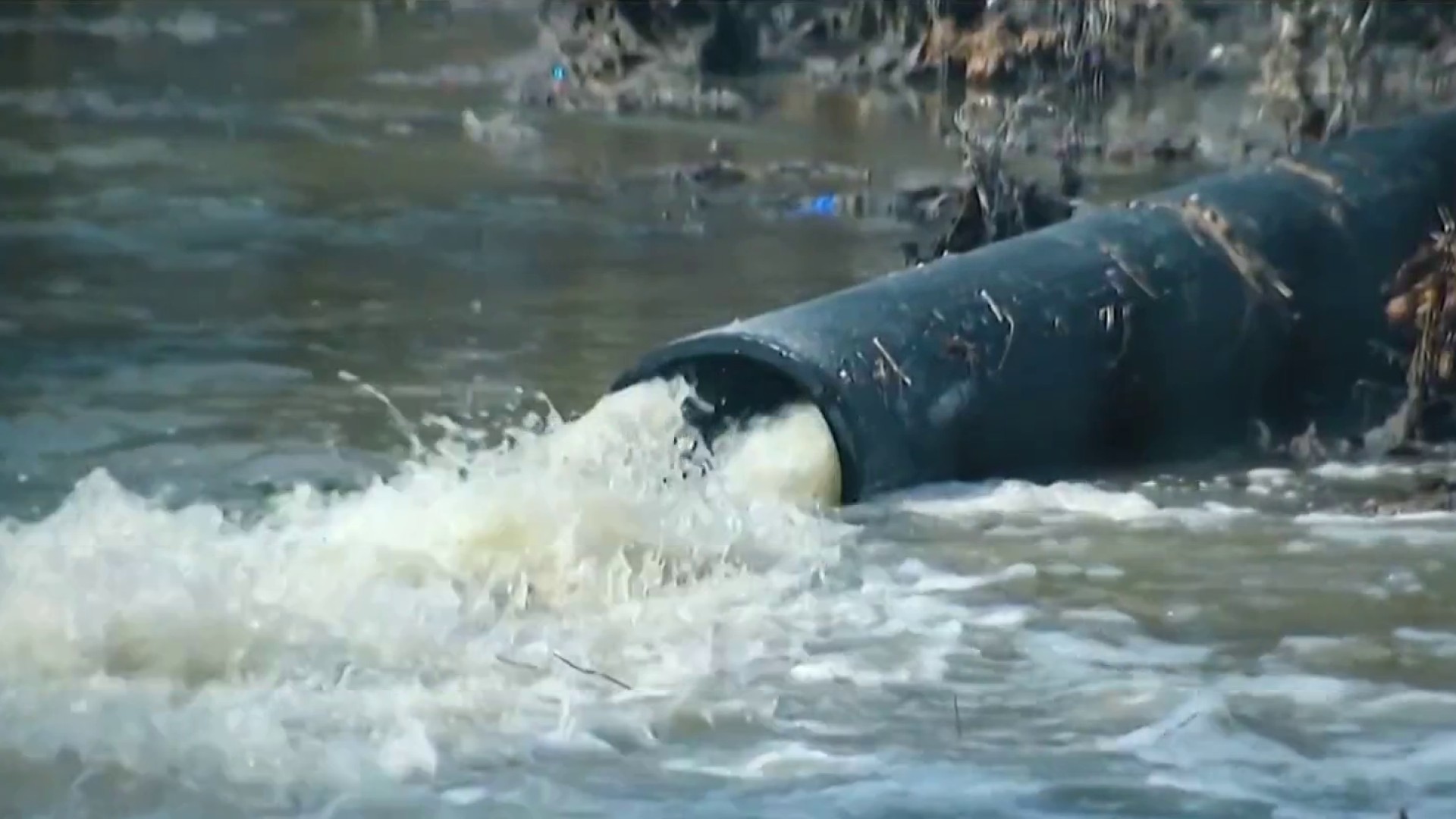
Officials revealed the extent of the progress on Friday, which was set back by a large sewage overflow Feb. 9.
They say drinking water remains safe because the intake currently in use is upstream from the break.
“The water used for our drinking water is being pulled from upstream of the break (at Great Falls),” the mayor’s office said in a statement on social media on Friday. “Any sewage that went into the river because of the break in the Potomac Interceptor flowed away from the water intake and not towards it.”
“An intake site for drinking water does exist downstream from the break, at Little Falls, but it was not in operation during the spill and it remains closed,” the statement continued.
All water pulled from Great Falls goes to the Washington Aqueduct, which is cleaned, purified and tested for safety before it is used residentially.
Officials also say samples show the very high levels of E. coli bacteria in the Potomac River have been steadily decreasing.
They referenced two assessment reports by contractors, one from 2021, the second from 2024, indicating sections of the interceptor pipe, built in the 1960s, were in “troubling” condition and that repairs were made.
“That was deemed as more critical,” Matt Brown of D.C. Water said. “The method there, it was about 800 linear feet of sliplining in order to reinforce that section.”
Health officials in D.C. and Maryland said it remains dangerous to have any type of contact with the water from the Potomac River in the numerous recreation areas downriver from where the pipe ruptured. That advisory could change as spring approaches.
This story uses functionality that may not work in our app. Click here to open the story in your web browser.
from Local – NBC4 Washington https://ift.tt/IclGB8x





0 Comments