
You’ve got the pedal to the metal – but the car won’t go any faster than 45 mph.
News4 tried driving a car with an intelligent speed assistance device, or ISA, installed.
A law that goes into effect in Virginia on July 1, 2026, allows judges to require people convicted of reckless driving to have the device installed in their cars, which prevents them from being able to speed.
It’s a law D.C. already has, and it’s coming to Maryland this fall.
The device is next to the steering wheel, where a GPS might usually be. It uses GPS and available road data to restrict the vehicle from exceeding the speed limit. It doesn’t force a car to brake; it just prevents acceleration above the posted speed limit.
Judges who convict reckless drivers or street racers could order them to have an ISA installed in their cars, in lieu of suspending their license. That way, the driver can still get to work but can’t speed to get there.
The law requires drivers to complete a program. It could be six months with the device before it can be removed. The goal is to prevent traffic deaths and tragedies.
‘She was a normal and absolutely amazing little girl’
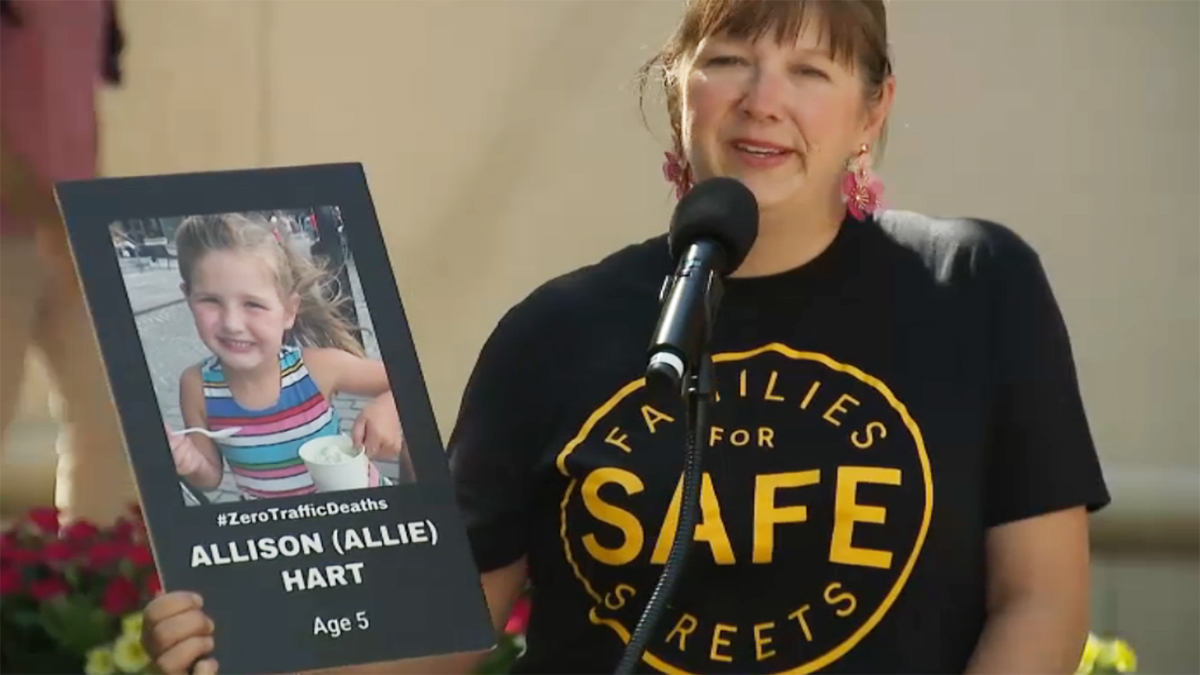
Jessica Hart is a proponent of the technology. On Sept. 13, 2021, her 5-year-old daughter, Allie Hart, was hit and killed as she rode her bike through an intersection in D.C.
“We were getting ice cream. We were headed to the splash park. She was a normal and absolutely amazing little girl,” her mom, Jessica Hart, said, starting to cry.
Nearly 40,000 Americans die in traffic-related crashes each year, according to the National Highway Traffic Safety Administration. Speed is a factor in about a third.
“Allie would’ve turned 10 two weeks ago, and instead of having ice cream with her, we had ice cream with her little brother, who she never got to meet because I was pregnant when she was killed,” Hart said.
She worked with lawmakers to get the technology approved for use in D.C. It’s now headed to several states.
What about privacy concerns?
The technology brings privacy concerns, Maryland state Sen. Jeff Waldstreicher acknowledged.
“This isn’t being installed in all vehicles, which I think is problematic and a real, legitimate privacy concern,” he said. “It’s being installed only in the vehicles of super speeders – people who have abused their privilege of driving to such a degree that a judge feels forced to require this, and that’s the appropriate place for this technology.”
Bill Chastain works for LifeSafer ISA and said drivers’ data is protected.
“We don’t share their data. If the court requests it, we’ll send over their violations but, as in their GPS coordinates, no, we don’t send them,” he said.
D.C. started installing the technology into agency fleet vehicles and District-managed school transportation vehicles.
“We all have seat belts; they save lives and this can do that too,” Hart said.

Sign up for our free deep-dive newsletter, The 4Front, to get standout News4 stories sent right to your inbox. Subscribe here.
from Local – NBC4 Washington https://ift.tt/lRxZJw7


0 Comments